


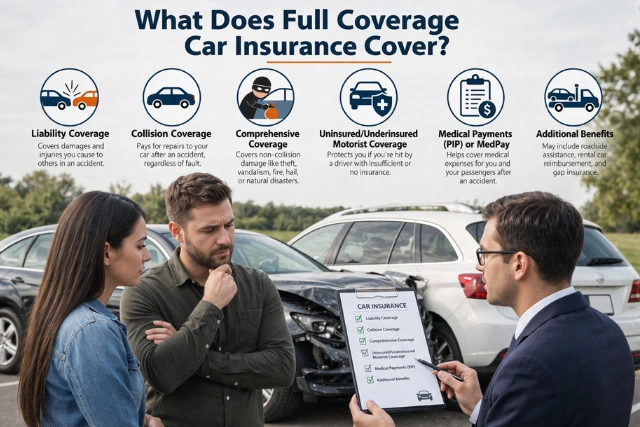
Many motorists question what does full coverage car insurance cover, auto insurance includes. Most people associate full coverage with total protection from any loss; however, this is incorrect as full coverage consists of several types of insurance that have been packaged together.
Knowing the specifics of what does full coverage car insurance cover, includes can be very helpful when you find yourself in the aftermath of an accident or damage or theft resulting from a natural disaster. Our guide will go over the basic coverage included with your full coverage auto insurance policy, as well as specific options for additional coverage, and a review of the limitations associated with full coverage.
What Does Full Coverage Car Insurance Cover?
People ask what does full coverage car insurance cover, they think full coverage means all three of these things:
1. Liability Coverage
2. Collision Coverage
3. Comprehensive Coverage
These three parts make up what most automobile insurance companies and most automobile drivers call full coverage.
Let’s go through each component in detail.
Liability Coverage – The Legal Requirement
Liability Insurance is generally required throughout the United States and abroad. Liability insurance protects you from financial responsibility for any damages you may cause to another person or an individual’s property.
Liability Insurance would provide coverage in the following ways:
- Medical Expenses for Other Drivers and Passengers
- Property Damage (i.e. someone else’s vehicle or fence)
- Legal Fees in the Event of a Lawsuit
However, Liability Insurance does NOT cover damage to your own vehicle. Therefore, having comprehensive automobile insurance will give you additional protection from financial responsibility for damages you must have repaired on your own vehicle.
Collision Coverage – Protecting Your Own Vehicle
If you’re asking full coverage car insurance what does it cover when you crash into something, collision coverage is the answer.
It pays for repairs to your vehicle if:
- You hit another car
- You hit a pole or tree
- Your car flips over
- You’re involved in a single-car accident
Collision coverage applies regardless of who is at fault.
Comprehensive Coverage – Non-Collision Protection
Comprehensive coverage handles damage that isn’t caused by a collision.
It usually covers:
- Theft
- Fire
- Vandalism
- Floods
- Falling objects
- Animal damage (like hitting a deer)
So when someone asks what all does full coverage car insurance cover, comprehensive coverage is what protects against unexpected events outside of accidents.
Full Coverage Insurance: What You Actually Get
Here’s a simple breakdown:
| Coverage Type | What It Covers | Required? |
| Liability | Damage & injuries to others | Yes (in most areas) |
| Collision | Damage to your car from crashes | Optional (often lender-required) |
| Comprehensive | Theft, fire, weather, vandalism | Optional (often lender-required) |
If you finance or lease your car, your lender typically requires collision and comprehensive coverage.
Additional Coverage Options Often Included
Many people are under the assumption what does a full coverage car insurance cover,However, there are several additional coverage options available that will provide you with better overall protection.
Uninsured / Underinsured Motorist
Will help pay for your injuries if you are injured in an accident caused by uninsured/underinsured drivers.
Medical Payment or Personal Injury Protection (PIP)
Will cover medical expenses (for you and others) related to an accident, regardless of liability.
Roadside Assistance
Will provide assistance for your vehicle if it has broken down or needs to be towed or jump started.
Rental Reimbursement
Covers the cost of a rental vehicle while your vehicle is being repaired.
Each of these options can provide you with a greater degree of protection but they will also most likely cause your premium to increase.
What Full Coverage Does NOT Cover
Even though it sounds complete, full coverage does not mean “everything.”
Here are common exclusions:
- Mechanical breakdowns
- Regular maintenance (oil changes, brake pads)
- Wear and tear
- Engine failure due to neglect
- Intentional damage
So if you’re asking what does full coverage car insurance cover, remember it focuses on accidents and unexpected damage—not routine repairs.
Factors That Influence the Cost of Full Coverage
The cost of full coverage depends on:
- Your driving history
- Age
- Vehicle type
- Location
- Coverage limits
- Deductible amount
Because full coverage protects your vehicle, full coverage usually costs more than vehicle liability-only insurance.
Usually, you will have a higher deductible in order to get a lower premium, which will also result in higher out-of-pocket expense should a claim be made.
Is Full Coverage Worth It?
Full coverage is often worth it if:
- Your car is new or valuable
- You have a loan or lease
- You live in an area with high theft rates
- You can’t afford to repair or replace your vehicle out-of-pocket
However, if your car is older and has low market value, paying for full coverage might not make financial sense.
When Should You Drop Full Coverage?
You might consider dropping collision and comprehensive if:
- Your car’s value is less than 10 times your annual premium
- Repair costs exceed vehicle value
- You have enough savings to replace the car
Always compare your vehicle’s current market value before making a decision.
Conclusion
Understanding what does full coverage car insurance cover, helps ensure you choose the best way to protect yourself financially. Even though having full coverage means you have additional financial help in case of an accident, it’s still not unlimited protection.
You should always carefully check your policy, compare quote options and determine the best coverage option by looking at the value of your vehicle in relation to your finances. Striking the right balance will provide you with adequate protection without being charged too much for it.
Frequently Asked Questions (FAQs)
1. How can I summarize the coverages provided under full coverage auto insurance?
This type of insurance provides a liability to others for damages you cause and for damages incurred to your own vehicle as a result of a collision, as well as theft of a vehicle and insured damages to vehicles from hazards other than accidents.
2. Does full coverage include engine failure?
No. Mechanical breakdowns and maintenance issues are not covered under full coverage insurance.
3. Is full coverage required by law?
No. Only liability insurance is legally required in most places. However, lenders usually require full coverage for financed vehicles.
4. What all does full coverage car insurance cover in a total loss accident?
If your car is totaled, collision or comprehensive coverage pays the vehicle’s actual cash value minus your deductible.
5. Does full coverage car insurance cover rental cars?
It may extend to rental vehicles in some cases, but coverage varies. Always check your policy details.