


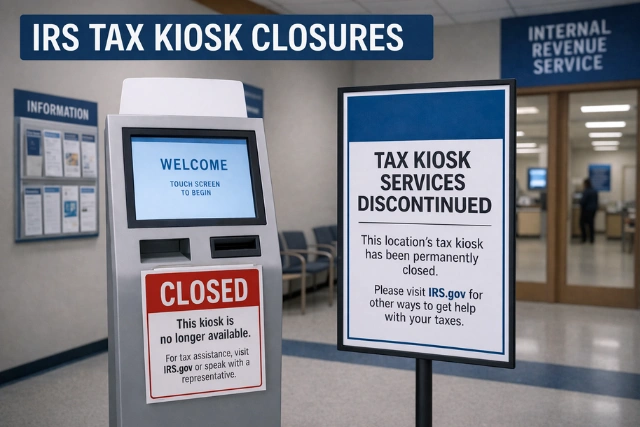
With the IRS tax kiosk closures affecting multiple locations, taxpayers are confused on where to go since they had depended on kiosks for quick assistance with their taxes rather than visiting an entire IRS office.
Before, IRS tax kiosk closures allowed taxpayers to perform some basic tax-related tasks remotely so they wouldn’t have to visit an IRS office. Taxpayers will gain clarity about why the IRS Tax Kiosk was closed and find out what other ways exist for them to get their taxes done by understanding why the IRS Tax Kiosk closed.
Understanding the Role of IRS tax kiosk closures
The IRS established Tax kiosks as a way to enhance the user experience by reducing wait times to pay taxes, validate taxpayer identity as well as receiving basic assistance without having to go to an IRS Location. The kiosks allow users convenience, easy access, plus an intermediary between the online services the IRS offers as well as visiting a full-service IRS Office.
What Led to IRS Tax Kiosk Closures?
The IRS tax kiosk closures was not based on one particular reason, but rather was caused by a combination of operational and strategic reasons. Many of these reasons were due to:
- An increase in the usage of digital tax services.
- Increased costs associated with maintaining physical kiosks.
- Decreased numbers of customers visiting some locations.
- Security and privacy issues associated with physical kiosks.
As technology has progressed, the IRS decided to move its resources towards centralized and online services.
IRS Tax Kiosk Closures and Service Changes
IRS tax kiosk closures have had a dramatic and negative impact on the way taxpayers interact with the IRS and file their taxes. For many taxpayers, digital tools provide a very efficient means of interacting with the IRS, but for others the switch from in-person services to digital interaction can be challenging and confusing.
The closures have pushed more taxpayers toward phone support, appointment-based offices, and professional tax assistance.
Challenges for Individual Filers
For many individual taxpayers, particularly seniors and first-time filers, the IRS tax kiosk closure has created a potentially daunting experience. A lot of people used to go to a tax office to ask their general questions and get documents established as valid. Taxpayers will now have to find their own way through online systems without kiosks.
This will cause them to expend more time and energy in locating the same answers that they would have been given in person.
Effects on Small Business Owners
Small businesses previously used kiosks to manage payroll taxes and filing questions. IRS tax kiosk closures now mean more dependence on accountants or IRS portals.
This shift can increase costs and delay issue resolution for business owners.
Options Available After IRS Tax Kiosk Closures
Even with IRS tax kiosk closures, taxpayers still have multiple ways to get help.
| Support Method | How It Helps |
| IRS Online Services | Manage payments, records, and notices |
| Phone Support | Speak directly with IRS representatives |
| Taxpayer Assistance Centers | In-person help with appointments |
| Certified Tax Professionals | Expert filing and compliance support |
| Free Filing Programs | No-cost filing for eligible taxpayers |
These alternatives now handle most of the services once offered by kiosks.
How Taxpayers Can Adapt to the Closures
Taxpayers preparing for IRS Tax Kiosk closures should create online accounts as well as gather the required documents and materials in order to reduce the amount of stress related to filing taxes.
Taxpayers may also look for free or low-cost programs that provide help with tax preparation if they require the services of a tax professional.
Are IRS Tax Kiosk Closures a Long-Term Move?
Indicators point to the fact that many IRS kiosks have closed permanently and this is part of a bigger trend rather than just a temporary change; they also continue investing heavily into developing digital solutions as well as creating services that utilize appointments.
The IRS may continue to evolve its service models over time; however, there will most likely not be many kiosk locations opening up again.
Pros and Cons of IRS Tax Kiosk Closures
Advantages
- Lower operating costs
- Improved digital security
- Centralized service delivery
Disadvantages
- Reduced in-person access
- Learning curve for online tools
- Higher reliance on third parties
These trade-offs explain why IRS tax kiosk closures remain a concern for many taxpayers.
Conclusion
IRS tax kiosk closures have made a very clear and concrete movement away from how they support taxpayers via taxation through their closing of all of their kiosks. In the past, kiosks provided taxpayers a convenient middle ground to access the IRS resources as well as provide a full-service office. Due to advancements in technology and changes in business priorities, these formerly helpful kiosks are now obsolete in the modern-day IRS tax structure.
While the IRS shutting down its tax kiosks may pose a challenge for those people who prefer to receive personal assistance, there are still options available to provide tax help. There are numerous forms of online IRS support, scheduled appointment based assistance centers, and numerous professional tax preparation services, all of which help fill the void left by the closure of IRS tax kiosks. By raising awareness of these options and preparing early for their upcoming tax obligations, taxpayers should be able to effectively manage their tax obligations without any issues
Frequently Asked Questions (FAQs)
1. What do IRS tax kiosk closures mean?
IRS tax kiosk closures refer to the shutdown of physical service kiosks that offered limited in-person tax support.
2. Why did the IRS close these kiosks?
Closures happened due to budget limits, low usage, and a move toward digital tax services.
3. Who is most affected by IRS tax kiosk closures?
Seniors, low-income taxpayers, and those without internet access are often most impacted.
4. What replaces IRS tax kiosks now?
Online accounts, phone support, Taxpayer Assistance Centers, and tax professionals.
5. Will IRS tax kiosks come back?
At this time, IRS tax kiosk closures appear to be a long-term decision.