

Quick Answer: Where Is the Policy Number on an Insurance Card?
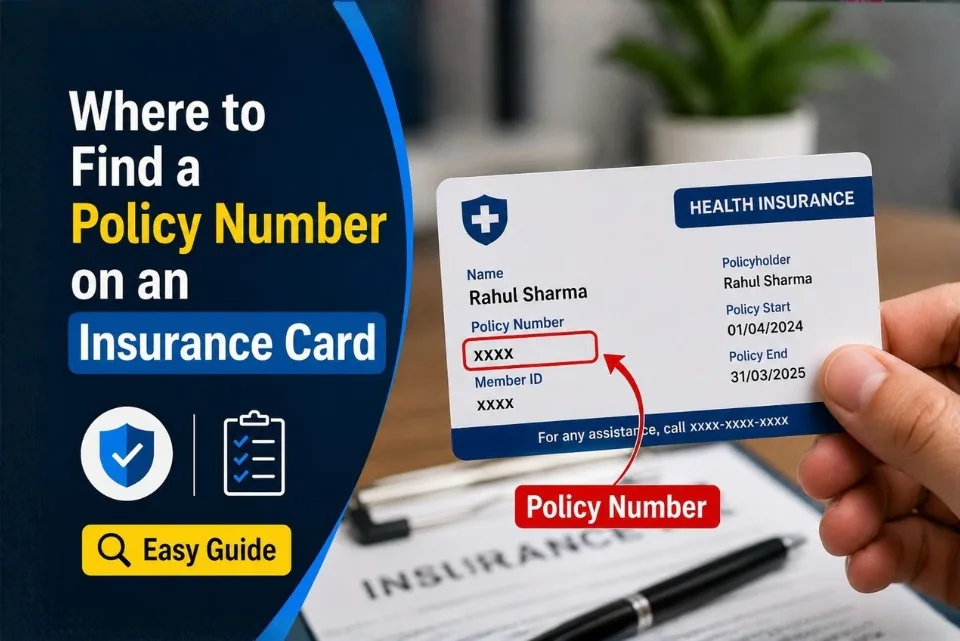
Your policy number on your insurance card is almost always on the front of the card, typically near the top or just below your name. Look for labels like:
- “Policy #” or “Policy ID”
- “ID” or “Member ID” (often the same number)
- “Subscriber Number” or “Subscriber ID”
Can’t find it on the front? Check the back of the card, or log in to your insurer’s app or website — it’ll be right there in your account profile.
Knowing where to find a policy number on an insurance card is one of those things nobody explains until you’re standing at a doctor’s front desk, the receptionist is staring at you, and you’re flipping your health insurance card over and over trying to figure out which number they actually want. Sound familiar? You’re definitely not alone.
Once you know which label to look for, finding it becomes much easier. This guide breaks down exactly where your policy number on an insurance card is located, what it means, how it’s different from your group number and Member ID, and what to do when you genuinely can’t find it. If you’re still learning the basics of how health insurance works, our guide on what preauthorization means in health insurance explains another important part of using your coverage.
What is a Policy Number on an Insurance Card?
Your insurance policy number is a unique code that ties you to your specific health insurance plan. Think of it as your personal ID inside your insurer’s system. Every time a doctor’s office submits a claim, fills out paperwork, or verifies your coverage — this is the number they use to pull up your file.
Without the correct policy number on your insurance card, a claim can get rejected, delayed, or charged incorrectly to you. That’s why providers always ask for it upfront — at office visits, at the pharmacy, at urgent care, even when you call a specialist. Think of it as the number that allows your insurance company to recognize your coverage. If you’ve ever had an insurance claim issue, you may also want to learn whether a closed insurance claim can be reopened in certain situations.
The insurance company uses this number to track your medical expenses, verify your benefits, determine what’s covered under your health insurance plan, and process your reimbursements correctly. Getting it wrong — or giving the wrong number — is one of the most common causes of denied claims.
Where to Find a Policy Number on an Insurance Card – Step by Step
Step 1 – Look at the front of your card first
The policy number on most health insurance cards sits near the top, often right below your name or beside the insurer’s logo. It’s typically labeled “Policy #,” “Policy ID,” “ID,” or “Member ID.” If your card is from a major carrier like Blue Cross Blue Shield, UnitedHealthcare, Aetna, or Cigna, this number will almost always be prominently displayed on the front.
Step 2 – Know what the label might say
Not every insurance card uses the same wording. Here’s what different insurers may call the same number:
- “Policy ID” or “Policy #” – most straightforward label
- “Member ID” or “Member #” – very common on employer-sponsored plans
- “Subscriber Number” or “Subscriber ID” – used if you’re the primary account holder
- “ID” alone – some cards just print “ID” with the number next to it
All of these typically refer to the same policy number your doctor’s office needs. When someone asks for your insurance policy number, the number next to any of those labels is what they want.
Step 3 – If it’s not on the front, flip the card over
Some employer-sponsored or union health plans may place additional information on the back of the insurance card. When the front of your card offers no obvious policy and member numbers, the reverse could contain your claims submission, customer service contact information, and payer IDs.
Step 4 – Use your insurer’s app or website
Today, most major insurance companies provide digital insurance cards through their mobile apps and online member portals. Log in to your account — your policy number, Member ID, and group number will all be clearly displayed. This is also the fastest option if you’ve lost your physical card.
Step 5 – Call customer service
If all else fails, reach out to your insurance company directly. The phone number for member services is printed on the back of your card. Just call and ask — a representative can confirm your policy number and walk you through any other details on your card.
Understanding Every Number on Your Insurance Card
Your health insurance card may include a lot of numbers that look similar. Here’s what each one actually means — and why it matters:
| Label on Card | What It Is | Who Uses It |
| Policy # / Policy ID | Your unique identifier for your specific insurance coverage | Doctors, clinics, pharmacies, hospitals |
| Member ID | Often the same as the policy number; identifies you personally within the plan | Providers, claims processing |
| Group Number | Identifies your employer’s or organization’s insurance plan | Insurer uses it to identify your employer’s benefits package |
| Subscriber Number | The primary account holder’s ID — important on family plans | Used when a dependent visits a provider |
| Payer ID / EDI | A unique code that identifies your insurance company to healthcare systems | Used by hospitals and providers for electronic claims |
| RxBIN / RxGRP / PCN | Prescription-specific codes for routing pharmacy claims | Pharmacies when filling prescriptions |
Is the Policy Number the Same as Your Member ID?
This is one of the most commonly Googled questions about insurance cards — and the answer is: usually yes, but sometimes no.
| Insurance Card Number | Purpose |
|---|---|
| Policy Number | Identifies your insurance policy |
| Member ID | Identifies the covered individual |
| Group Number | Identifies employer group plan |
| Subscriber Number | Identifies the primary policyholder |
| Payer ID | Used for electronic claim processing |
| RxBIN/RxGRP | Used by pharmacies |
On most individual health insurance plans, the policy number and the Member ID numbers are the same. Your insurer assigns one unique code that serves both purposes. So when a receptionist asks for your “policy number,” and your card may include only a “Member ID,” you can confidently give them that number — it’s what they need.
However, on family plans, here’s where it gets slightly different. The underlying insurance policy number may be the same for the whole family, but each family member — the primary subscriber, spouse, and each dependent child — may have a different Member ID with a suffix added.
For example: the policy number might be XYZ123456789, but the child’s Member ID might be XYZ12345678901. The root number is the same; the suffix identifies the specific person.
Bottom line: when someone asks for a policy number, give them your Member ID. When they ask for a subscriber number, give the primary account holder’s ID. When in doubt, call the customer service number on the back of the card — they’ll clarify instantly.
Policy Number vs. Group Number — What’s the Difference?
These two numbers get confused all the time, and it’s an easy mistake. Here’s the clearest way to think about it:
Your insurance policy number is about you – it identifies your specific coverage and personal enrollment in a plan.
Your group number on your insurance card is about your employer – it identifies the specific insurance plan that your company or organization purchased. If ten thousand employees at your company all have the same insurer, they all share the same group number. But each of those employees has a unique policy number.
Not all insurance cards have a group number. If you bought your health insurance plan directly from an insurer (through the ACA marketplace, for example) rather than through an employer, your card may not show a group number at all — and that’s completely normal. The group number only appears when your type of plan is employer-sponsored or organization-based.
What Else is on Your Insurance Card?
While you’re looking for your policy number on your insurance card, it’s worth knowing what all the other fields mean. Every piece of important information on that card has a specific job:
Your name (and subscriber name): The front of the card shows the primary cardholder — the subscriber name on the insurance card.
If you’re covered under a parent’s or spouse’s plan, your name may appear separately as a dependent, or the subscriber’s name may appear instead of yours. This is normal.
Plan type (HMO, PPO, EPO, HDHP): The type of plan is usually printed on the front near the insurer’s name. This tells you whether you need a referral to see specialists, whether you’re restricted to a specific provider network, and how network and out-of-network coverage works. A PPO gives more flexibility on network and out-of-network providers; an HMO typically requires you to stay in-network and see a primary care physician (PCP) first.
Copay amounts: Many cards list fixed dollar amounts for office visits, specialist visits, urgent care, and emergency room visits. These are your copays — what you pay out of pocket each time you use that service, regardless of your deductible.
Contact information: The back of your card almost always has contact information, including a phone number for member services, a website, and often a claims mailing address. This is the fastest way to reach out to your insurance company for anything from billing questions to finding an in-network primary care physician (PCP). Before undergoing treatments that require insurer approval, it’s also helpful to understand how Medicare preauthorization forms work.
Prescription (Rx) codes: If your plan covers medications, you’ll see RxBIN, RxGRP, and PCN codes on the card — usually on the back. Pharmacies use these to process your prescription claims correctly.
What to Do If You Can’t Find Your Policy Number
Losing your card or staring at it blankly — both happen. Here’s exactly what to do:
Check your insurer’s app or website: Log in to your member account. Your policy number, group number, and digital health insurance card are all there. Most insurers now let you add your digital card to Apple Wallet or Google Pay too. Many insurers also provide online member portals where you can access policy documents and other insurance information. For example, here’s our guide on Acuity Insurance login.
Look at your insurance paperwork: Your original enrollment documents, Summary of Benefits, or Explanation of Benefits (EOB) letters will all include your insurance policy number.
Call member services: The customer service number on the back of your card — or on your insurer’s website — will get you a live representative who can confirm your number in seconds. For UnitedHealthcare members, you can also log in at myuhc.com. For Blue Cross Blue Shield members, your card or the BCBS member portal will have it clearly labeled.
Check with HR: If you get coverage through your job, your HR department has your policy number on file and can pull it up quickly.
Final Thoughts
Your insurance card is a small card that does a big job. Knowing where to find a policy number on an insurance card — and what every other number on it actually means — puts you in control of your healthcare from the moment you walk into any provider’s office.
The policy number is almost always on the front, near your name. It might be labeled as “Policy #,” “Policy ID,” “Member ID,” or just “ID.” Any of those is what your doctor, pharmacist, or clinic needs. Your group number on your insurance card is separate — it identifies your employer’s plan, not you specifically. And if you ever can’t find what you’re looking for, the contact information on the back of your card connects you directly to your insurer’s customer service team, who can walk you through everything.
It’s also a good idea to keep a photo or digital copy of both sides of your insurance card on your phone for quick access. It takes ten seconds and will save you from that front-desk fumble at your next appointment.
More Free Insurance Guides at USInsurance247: Health, auto, home, and life insurance explained simply – no agent, no sales pitch, just clear answers. If you’re comparing different types of insurance protection, you may also like our guide explaining accidental death and dismemberment vs life insurance.
Editorial Note: This guide is based on publicly available information from major U.S. health insurers and government healthcare resources. Insurance card layouts vary by insurer, so always refer to your official policy documents or contact your insurance provider for confirmation.
Frequently Asked Questions (FAQs)
Where to find a policy number on an insurance card?
It’s on the front of your health insurance card, usually near the top or just below your name. Look for labels like “Policy #,” “Policy ID,” “Member ID,” or “ID.” If you can’t find it on the front, check the back or log in to your insurer’s app or portal.
Is the policy number the same as the Member ID on an insurance card?
On most individual plans, yes — they’re the same number. On family plans, the core policy number may be shared while each person’s Member ID numbers differ by a suffix. When in doubt, give both and let the provider sort it out, or call customer service to confirm.
What is the group number on an insurance card?
The group number on your insurance card identifies your employer’s specific insurance plan. It’s labeled “Group #” or “Group ID.” It’s different from your policy number — the group number is about the organization, the insurance policy number is about your individual coverage.
What is the subscriber number on an insurance card?
The subscriber number on the insurance card is the primary account holder’s ID. If you’re the main policyholder, this is your number. If you’re a dependent (child or spouse on someone else’s plan), the subscriber number belongs to the primary member — but you’ll still have your own Member ID.
Where is the policy number on a UnitedHealthcare card?
Your insurance group number, or “policy number” (it might be listed as “Member ID” or “ID #”), is typically found on the face of your UnitedHealthcare insurance card. You may be able to log into myuhc.com or the UnitedHealthcare app to locate the number under your membership profile. For specific details, contact the member service telephone number on your insurance card.
Who is the policyholder on an insurance card?
The policyholder on an insurance card is the person who owns the insurance plan — often called the subscriber or primary member. If you purchased your own plan, that’s you. If you’re covered under a spouse’s or parent’s plan, they are the policyholder. Their name typically appears as the subscriber name on insurance cards.
Can I find my insurance policy number without my physical card?
Yes, easily. Log in to your insurer’s website or app — your digital health insurance card with your complete policy number and group number will be right there. You can also call the member services phone number for your insurance company, and they’ll verify it with some basic identification.
Reviewed By Editorial Review Team
This article has been reviewed by the USInsurance247 Editorial Review Team for accuracy, clarity, and relevance. Our team researches health insurance topics using trusted insurer resources, government publications, and industry guidelines to provide reliable, easy-to-understand information.