

Written by the USInsurance247 Content Team | Reviewed by Rohit Negi, Insurance Expert, USInsurance247.com | Last updated: August 2026
Quick Answer:
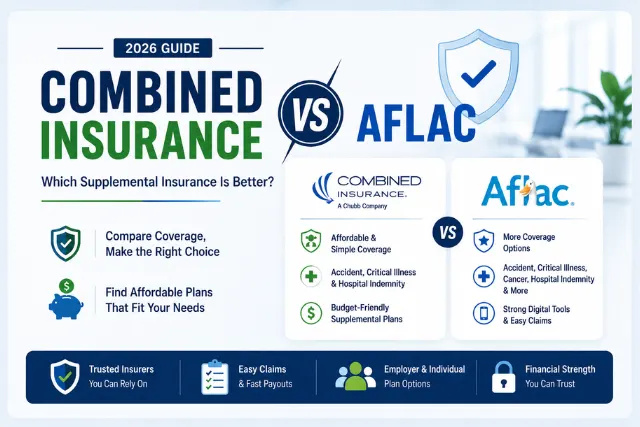
As part of a Combined Insurance vs Aflac comparison, let’s begin with a basic premise for both insurers: They both offer supplemental policies – accident, critical illness and hospital indemnity – to help put money in your pocket when primary coverage falls short. Aflac has a much more robust product catalog and the stronger brand name, though Combined Insurance plans often cost less, particularly on the accident and hospital indemnity policies. If one employer offers coverage and the other doesn’t, that likely settles the question of which provider to use. Otherwise, the decision is going to be down to the policies, pricing and which specific need you’re hoping to meet.
If someone’s trying to sell you some add-on plan through your work (or you’re looking for it on your own) the comparison of Combined Insurance vs Aflac-or Aflac vs Combined Insurance, depending on which of their marketing materials you encountered-is almost certainly one you’re considering. Those are the names that come up most frequently for this type of supplemental insurance. Before choosing between them, it’s also worth understanding the difference between accidental death and dismemberment (AD&D) insurance and life insurance, as these coverages are often offered alongside workplace benefit plans.
Combined Insurance vs Aflac at a Glance
| Feature | Combined Insurance | Aflac |
| Founded | 1922 | 1955 |
| Parent Company | Chubb | Aflac Incorporated (NYSE: AFL) |
| Headquarters | Chicago area, Illinois | Columbus, Georgia |
| Coverage Types | Accident, critical illness, hospital indemnity, disability, supplemental health | Accident, critical illness, cancer, hospital indemnity, disability, dental, vision, life |
| Online Claims | Yes, via policyholder portal | Yes, via member portal |
| Mobile App | MyCombined | Aflac mobile app |
| Employer Plans | Yes | Yes, extensive workplace presence |
| Individual Policies | Yes | Yes |
| Best For | Affordable core accident/hospital coverage | Broader product selection, digital tools |
How We Compared These Companies
This comparison draws on each company’s own published product pages, financial ratings from independent agencies, and publicly available customer feedback not a paid partnership with either insurer. We looked at coverage breadth, claims experience, digital tools, customer support, financial strength, and employer availability. Actual plans, pricing, and availability vary by state and by employer, so treat this as a starting point for your own comparison, not a final answer.
Combined Insurance vs Aflac: Company Overview
Combined Insurance
Founded by W. Clement Stone in 1922 and now part of Chubb, Combined Insurance historically made a name for itself selling easy-to-understand accident and supplemental health policies primarily through group plans offered by employers and an agent network. For most people, this is a good option if they’re shopping for very basic, cheap policies for accidents and hospital stays without a lot of other coverage to choose from.
Aflac
Aflac, founded in 1955 in Columbus, Georgia, is the largest supplemental health insurer in the U.S. and one of the most recognizable insurance brands in the country (yes, the duck). It holds an A+ (Superior) rating from AM Best and has increased its dividend for 38 consecutive years. Aflac’s product range extends further than Combined’s, covering dental, vision, and life insurance alongside its core accident and critical illness plans, making it a fit for people who want more coverage types under one roof.
Insurance Products Compared
| Product | Combined | Aflac |
| Accident Insurance | Yes | Yes |
| Critical Illness | Yes | Yes |
| Cancer Insurance | Yes | Yes |
| Hospital Indemnity | Yes | Yes |
| Disability Insurance | Yes (up to 2 years) | Yes |
| Dental | No | Yes |
| Vision | No | Yes |
| Life Insurance | Yes (supplemental) | Yes (term) |
Product availability varies by state and by whether a plan is sold individually or through an employer, always confirm what’s actually offered in your specific enrollment. If you’re comparing different insurers, you may also want to see whether American Family Insurance is a good company before making a final decision.
Coverage, Pricing & Claims Compared
Both insurers pay cash benefits directly to you rather than to a medical provider, which is the core appeal of supplemental coverage. You can use the money for deductibles, lost income, or any other unexpected expense. Riders differ in emphasis: Combined leans toward income-replacement extras (transportation and lodging benefits, disability income riders), while Aflac’s accident riders lean toward hospital confinement benefits. Waiting periods, exclusions, and exact benefit amounts vary by policy and state, so read the certificate of coverage rather than assuming either company’s plans are identical to what a coworker has.
| Pricing Factor | Combined | Aflac |
| Age & health | Affects premium | Affects premium |
| State of residence | Affects availability/price | Affects availability/price |
| Employer-sponsored | Often lower group rates | Often lower group rates |
| Tobacco use | May affect pricing on some plans | May affect pricing on some plans |
| General price level | Often more affordable on basic plans | Competitive, sometimes higher for broader coverage |
Both offer online claim filing, mobile app claim submission, and phone-based support; both request similar documentation (proof of loss, medical bills, itemized statements). Claims experience reports are mixed for both insurers. Some customers report fast, smooth payouts, others report longer waits on more complex claims. This is genuinely worth checking against recent, current reviews rather than an old snapshot, since claims handling can shift over time.
If you’ve already completed a claim and need to take further action later, here’s what you should know about whether a closed insurance claim can be reopened. Want help comparing an actual quote from either company? USInsurance247 can walk through it with you.
Digital Experience, Customer Service & Financial Strength Compared
Both companies offer a policyholder web portal and a mobile app (MyCombined for Combined, Aflac’s own app) covering claim status, bill pay, and document access. Aflac is generally regarded as having the more polished digital experience and broader self-service tools, reflecting its larger scale and higher marketing investment. Combined’s tools cover the essentials but feel less feature-rich by comparison, based on available user feedback.
On financial strength: Aflac carries an A+ (Superior) AM Best rating, affirmed in 2025, and is a Fortune 500 company with decades of dividend growth. Combined Insurance, as a Chubb company, benefits from its parent’s financial backing, though it’s worth checking the specific underwriting entity’s own rating for your policy rather than assuming it matches Chubb’s overall strength. Both are established, regulated insurers and neither should raise a solvency concern for a typical policyholder.
Pros & Cons
Combined Insurance Pros
- Competitive pricing on core plans
- Straightforward accident and hospital indemnity coverage
- Backed by Chubb
- Long operating history since 1922
Combined Insurance Cons
- Narrower product range (no dental/vision)
- Less brand recognition than Aflac
- Digital tools feel less polished
Aflac Pros
- Broadest supplemental product range
- A+ AM Best rating
- Strong digital tools and app
- Extensive workplace availability
Aflac Cons
- Premiums can run higher for broader coverage
- More plan options can mean more decisions to make
Combined Insurance vs Aflac: Which is Better for You?
| If You Need… | Better Fit |
| Employer-sponsored benefits | Both widely available |
| Digital account tools | Aflac |
| Affordable accident insurance | Combined Insurance |
| Cancer insurance | Both offer it; compare specific benefit amounts |
| Dental or vision add-ons | Aflac |
| Broadest single-carrier coverage | Aflac |
| Simple, budget-focused coverage | Combined Insurance |
Who Should Choose Each?
Select Combined Insurance if your employer provides Combined Insurance, you’re already enrolled with Combined Insurance and happy with what you get, or you prefer basic accident and hospital indemnity coverage and don’t want to buy products that don’t pay out.
Select Aflac if you desire more supplement insurance choices from a single insurer, would like a smoother, more intuitive technology-focused consumer experience, or if the workplace’s voluntary benefit program is set up to make Aflac a priority.
Key Takeaways
- Both insurers offer accident, critical illness, and hospital indemnity insurance.
- Combined Insurance is typically more affordable for core supplemental coverage.
- Aflac provides a broader selection of insurance products and stronger digital tools.
- Employer-sponsored plans can significantly affect pricing and availability.
- Always compare benefits, exclusions, and waiting periods—not just the monthly premium.
Final Verdict
There’s no single winner in Combined Insurance vs Aflac. Choose Combined Insurance if it aligns with your employer’s offering or you want affordable, no-frills accident and hospital coverage. Choose Aflac if you want a broader product lineup, stronger digital tools, or your workplace benefits program centers on it. Either way, compare the actual policy exclusions, waiting periods, and benefit amounts before enrolling, that’s where the real difference between these two shows up, not in the brand name. You can also learn how to read an insurance card so you understand your coverage and policy information after enrollment.
Things to Compare Before Choosing a Supplemental Insurance Plan
- Monthly premium
- Benefit amounts
- Waiting periods
- Policy exclusions
- Employer contribution
- Claim filing process
- Mobile app and online tools
- Financial strength rating
Frequently Asked Questions
Is Combined Insurance better than Aflac?
Neither is universally better. Combined tends to be more affordable on core plans, while Aflac offers a wider product range and stronger digital tools.
Does Aflac cost more than Combined Insurance?
Often, yes, particularly for broader coverage, though pricing depends heavily on age, state, and whether the plan is employer-sponsored.
Which insurer offers better accident insurance?
Both offer solid accident coverage with different rider emphases. Combined leans toward income-replacement benefits, Aflac toward hospital confinement benefits.
Can I buy policies directly from either company?
Yes, both offer individual policies in addition to employer-sponsored group plans.
Which company has better online claim tracking?
Aflac’s digital tools are generally considered more developed, though both offer functional online and app-based claim tracking.
Are both companies available nationwide?
Both operate broadly across the U.S., though specific plan availability varies by state.
Can I have policies from both companies at once?
Yes, there’s no rule against holding supplemental policies from multiple carriers, though duplicate coverage for the same event should be weighed against the added premium cost.
Which is better for employer-sponsored benefits?
Both are widely offered through employers check what your specific workplace enrollment includes rather than assuming one is standard.
How do I compare quotes between the two?
Don’t base choices on premium only – look for the actual benefit schedule, waiting periods, and exclusions for each option. These will show the real value difference.
About USInsurance247: USInsurance247 offers independent and clear information regarding US insurance products. This comparison is based on information published on Combined Insurance and Aflac Websites as of August 2026 and it’s not sponsored by either of them. Policy benefits, cost, and availability depends on your location and your employer, always read the policy contract before signing up.